When you design your labels in Canva, the first thought most people have is that they need to download their designs and then upload them to label sheet manufacturer's software (if available) or manually insert them into PDF or Word templates.
What many don’t know is that there’s actually a much faster and easier way: the Label Sheets Canva app. The app handles generating the label sheet printout for you - saving time and leaving you free to focus on creating the perfect label design!
Below is a step-by-step guide on how to use this app to print your Canva label designs directly on 102 different label sheet brands, ranging from major worldwide manufacturers like Avery® to many regional adhesive label makers around the world.
Note that some label manufacturers offer Canva label sheet templates for their products, but these still require you to manually copy and paste your design onto each label, align each one individually, and repeat the process across the entire sheet.
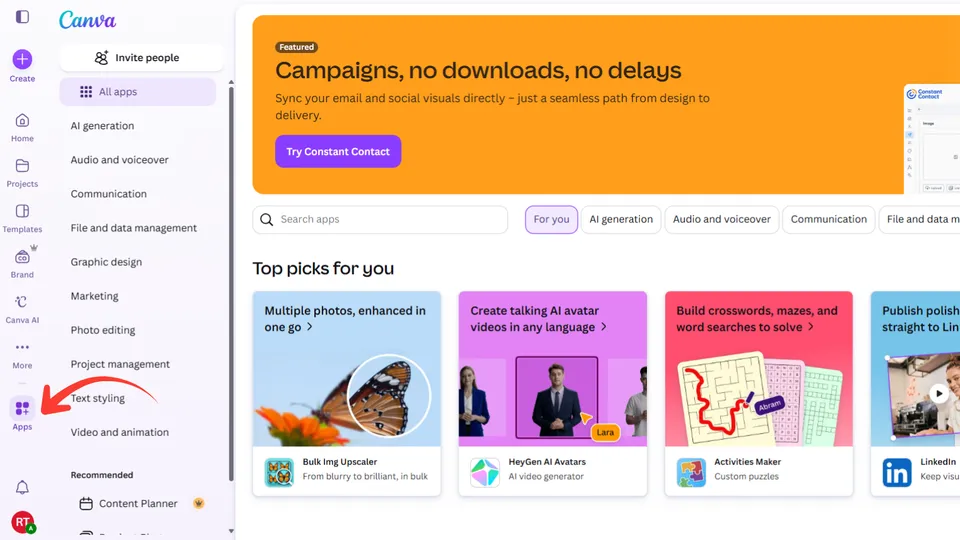
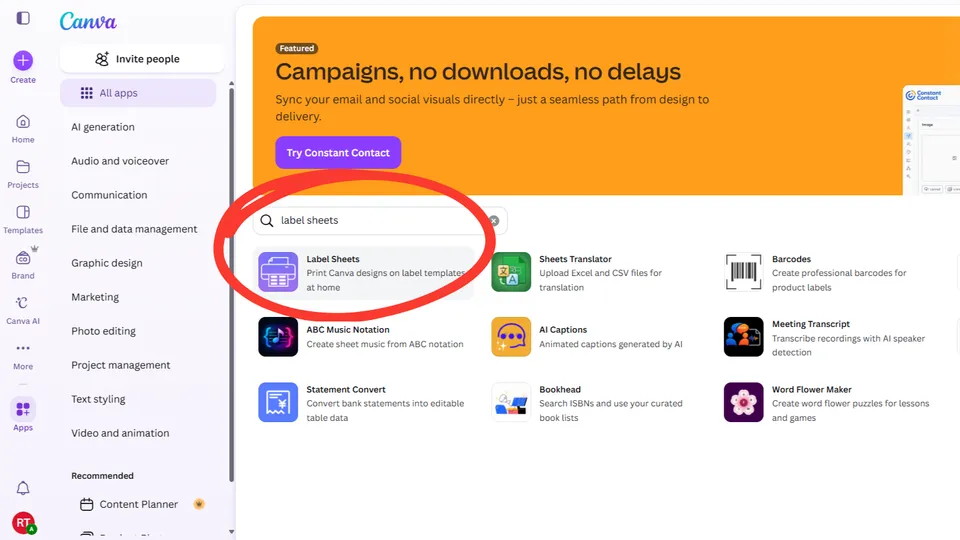
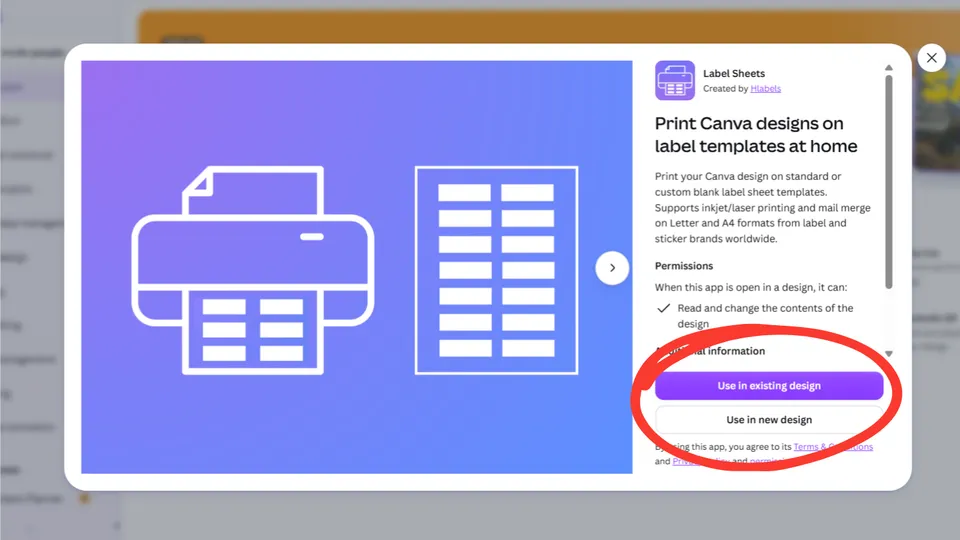
You can also start the app directly from a current design:
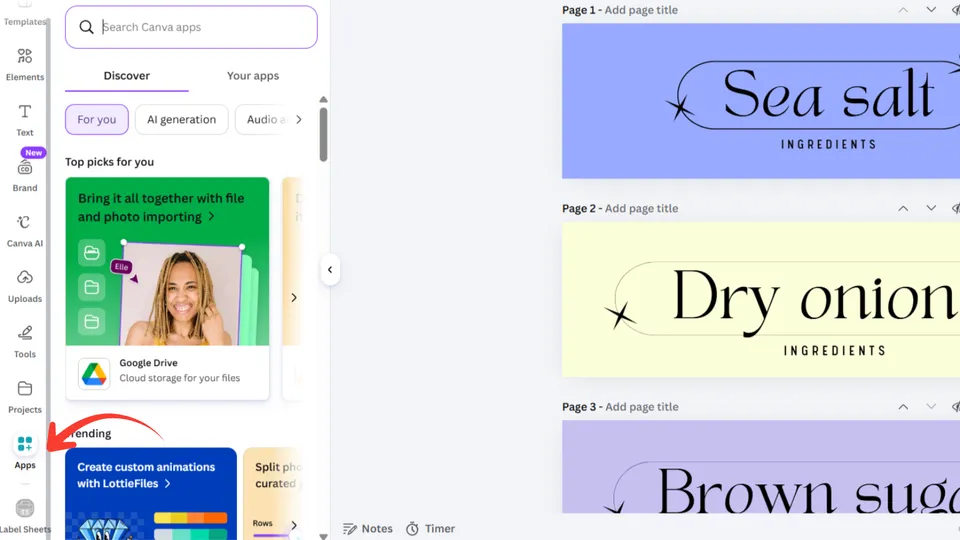
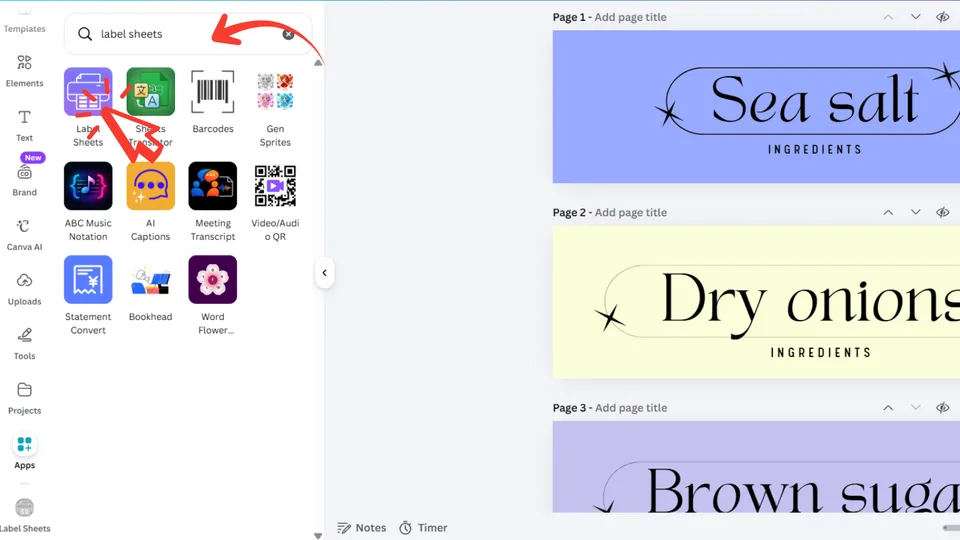
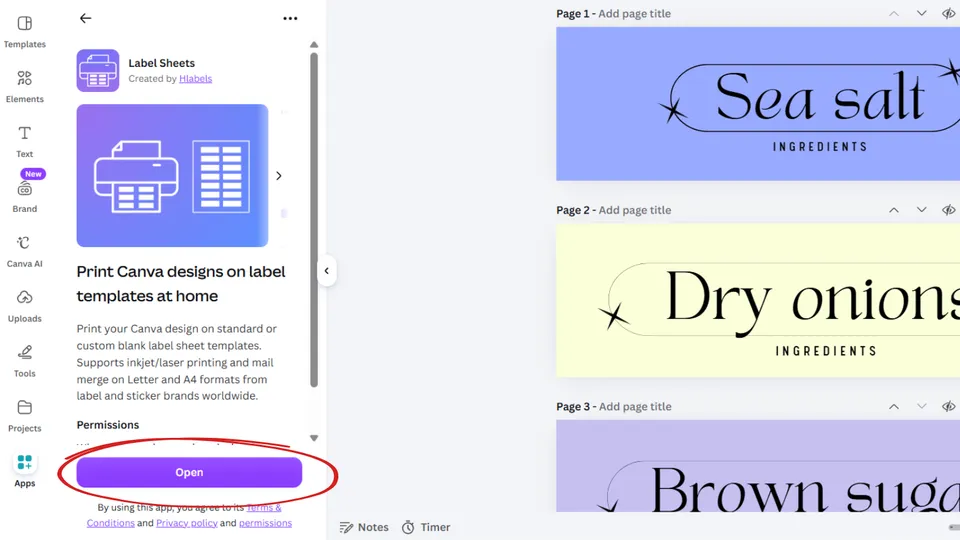
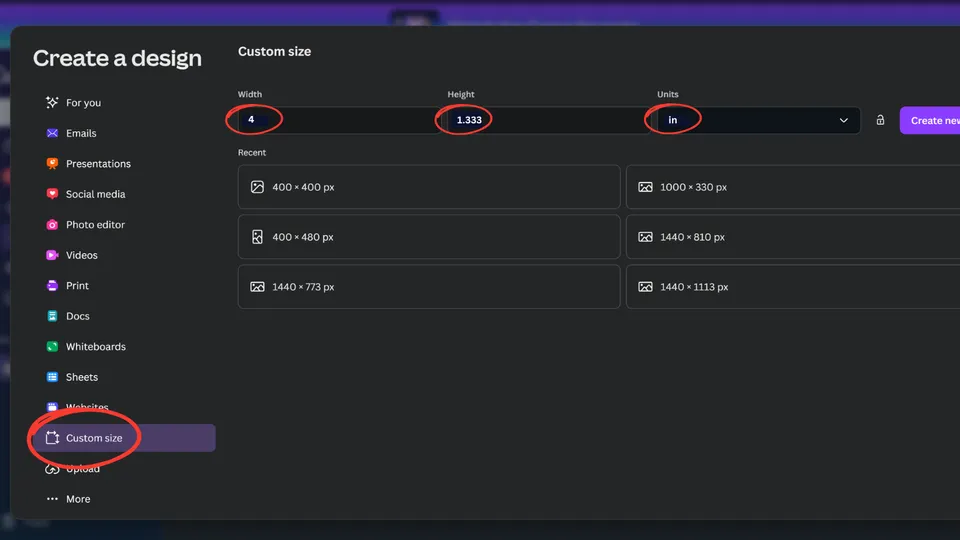
Create a new Canva design with exactly the same dimensions as your label. You can create it as you normally would, or you can create it when launching the Label Sheets app.
If you already have a label design, ensure that the width-to-height ratio of the design matches the physical width-to-height ratio of the label you are printing on. Our system does not stretch or crop label designs to fit the labels, so if the width-to-height ratios do not match, you will see empty space around the printed label.
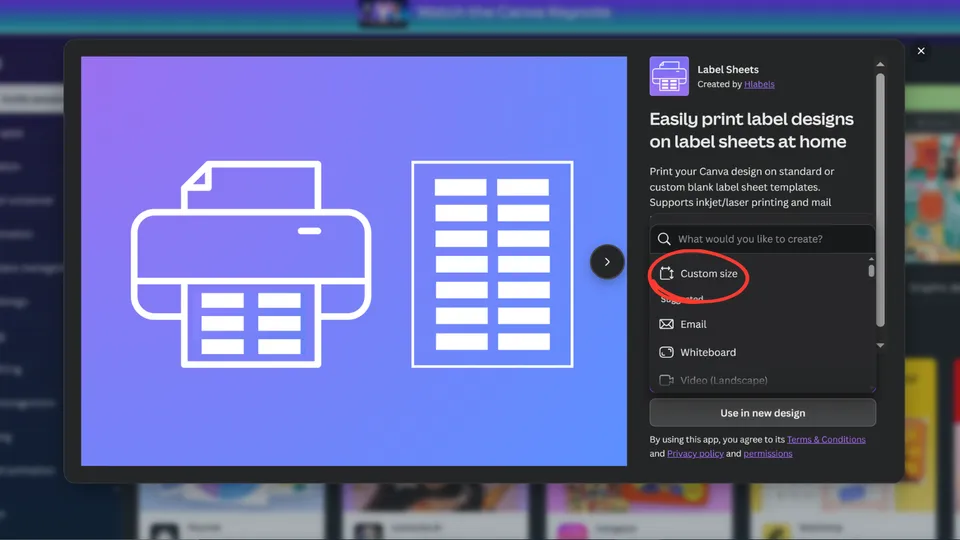
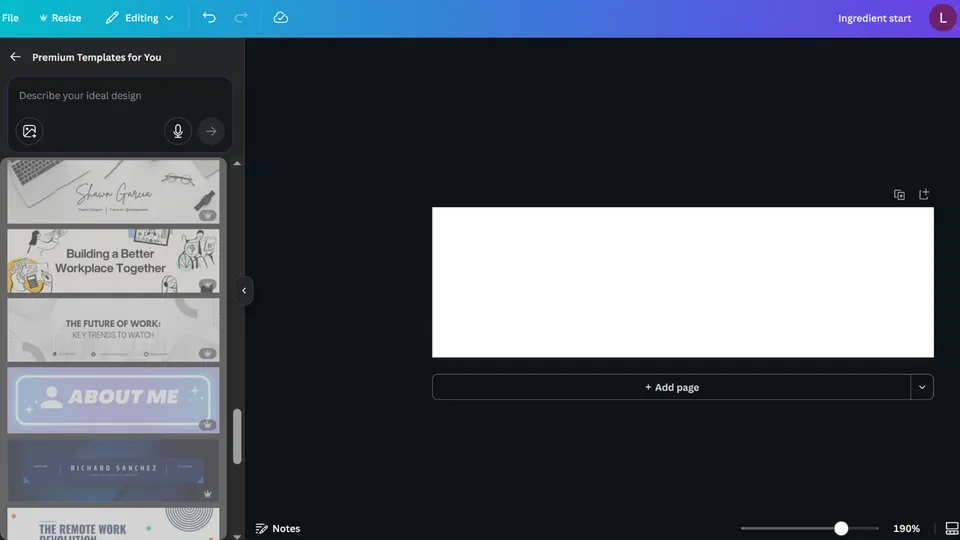
Before using the Label Sheets app, finish designing your label. If you need to print multiple label designs on the same sheet, create each design on its own Canva page (click + Add page beneath your last design).
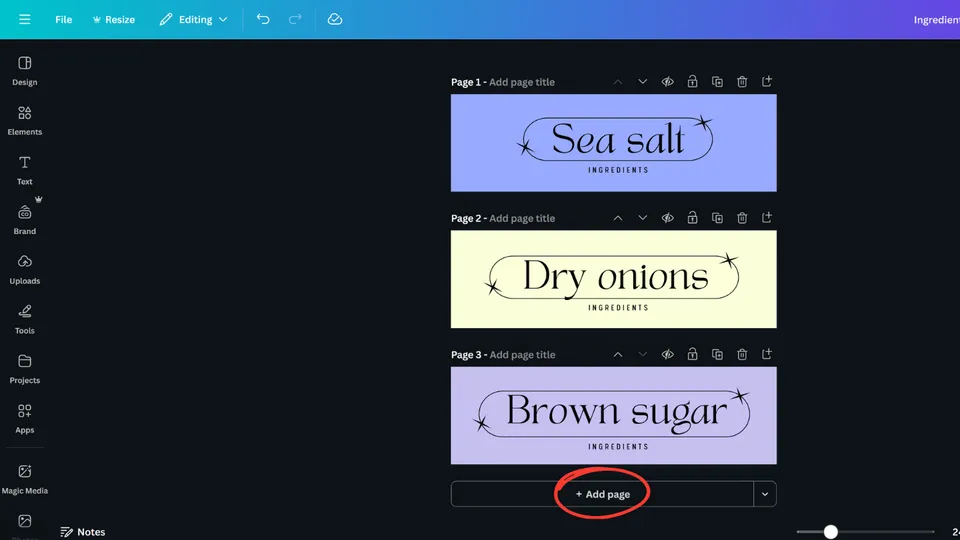
Standard label sheets are pre-manufactured sheets of adhesive labels designed for use with inkjet and laser printers. They come in standard sizes such as A4 or Letter and are produced by well-known manufacturers like Avery® and many other label brands worldwide. Each sheet contains multiple labels in a predefined layout, with perforated or die-cut labels that can be easily peeled off after printing.
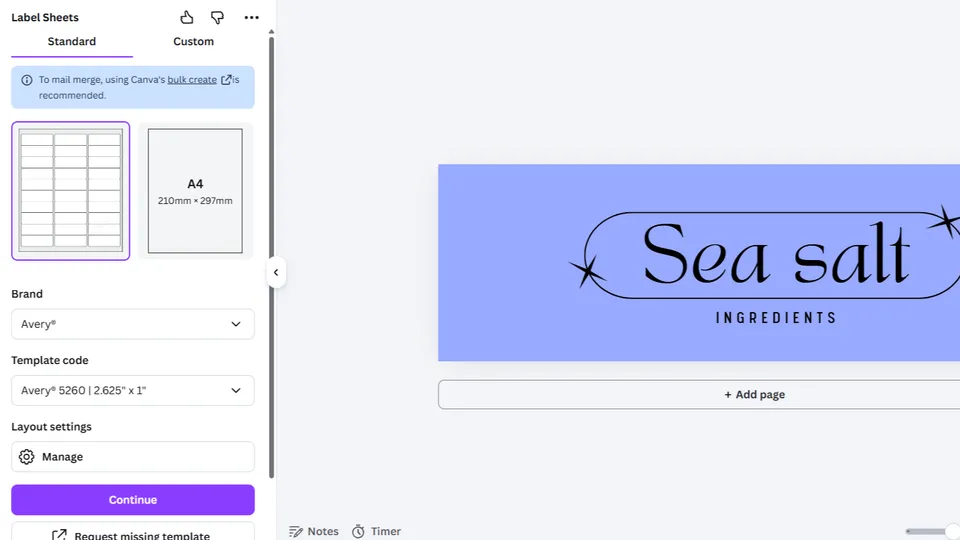
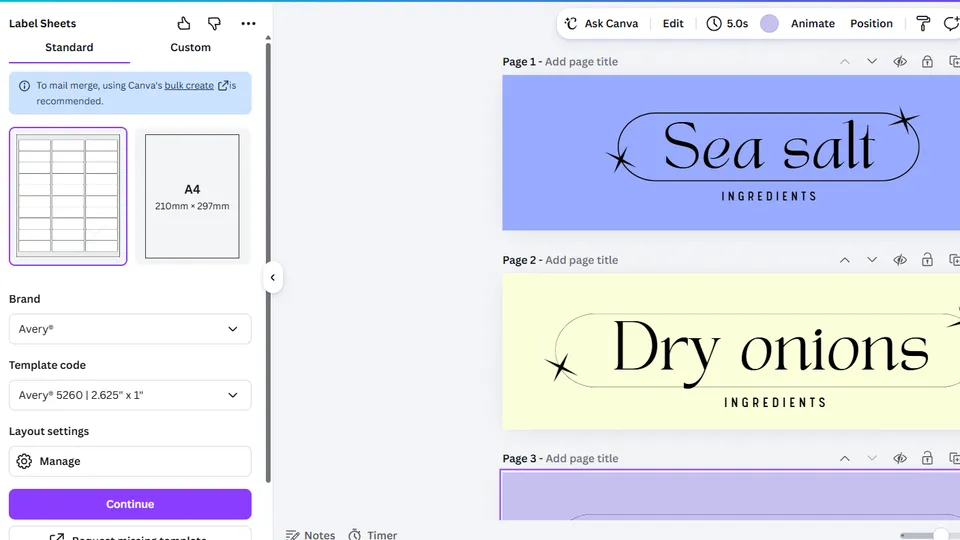
Each label sheet product is identified by its brand and template code.
Let’s suppose you are printing on Avery® 5260 label sheets.
To let the app know that, make the following selections in the app’s user interface:
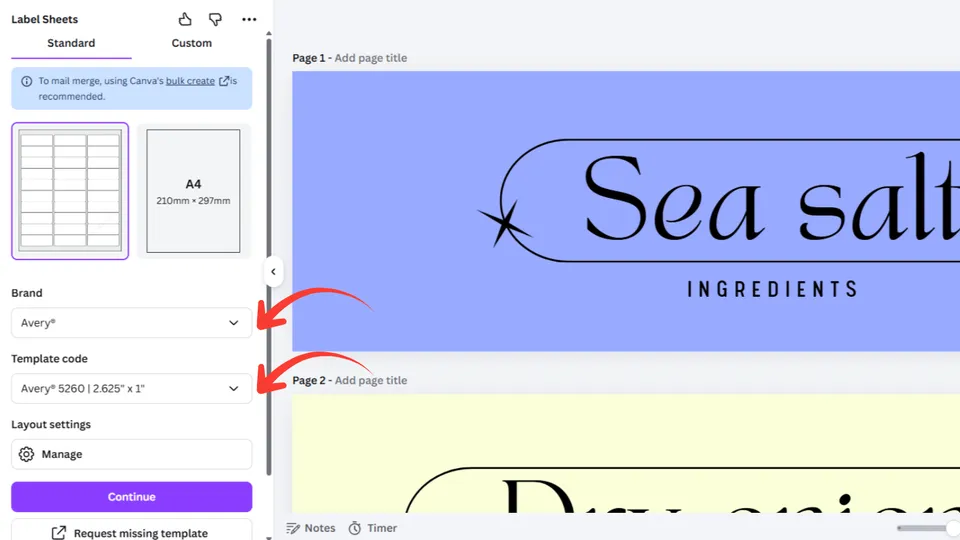
Once you select the template code, the app will automatically display options for adjusting the alignment and positioning of the label sheet printout. This document contains a dedicated section for this, so you can skip it for now.
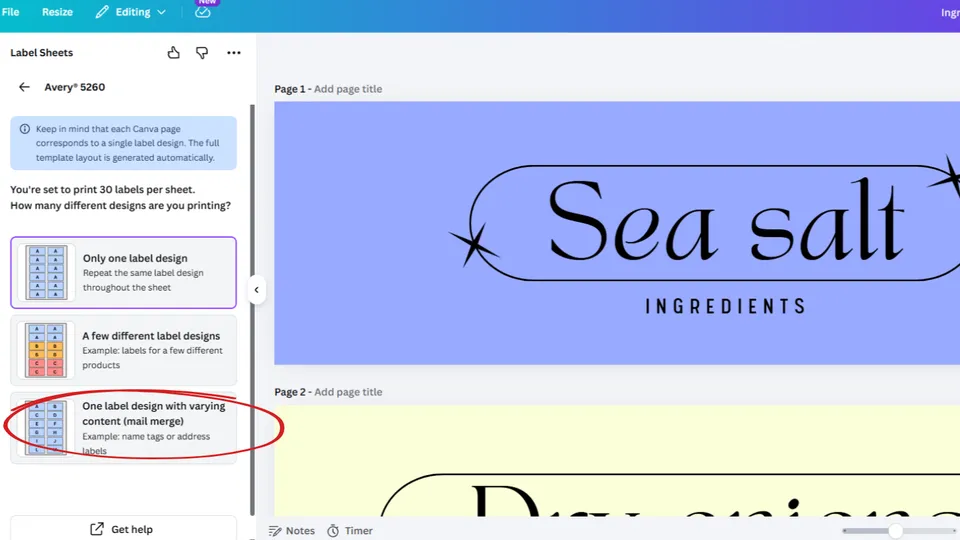
A label sheet contains multiple labels, and the way you distribute different labels across the sheet falls into three main categories.
Let’s use Avery® 5260, which contains 30 labels, as an example:
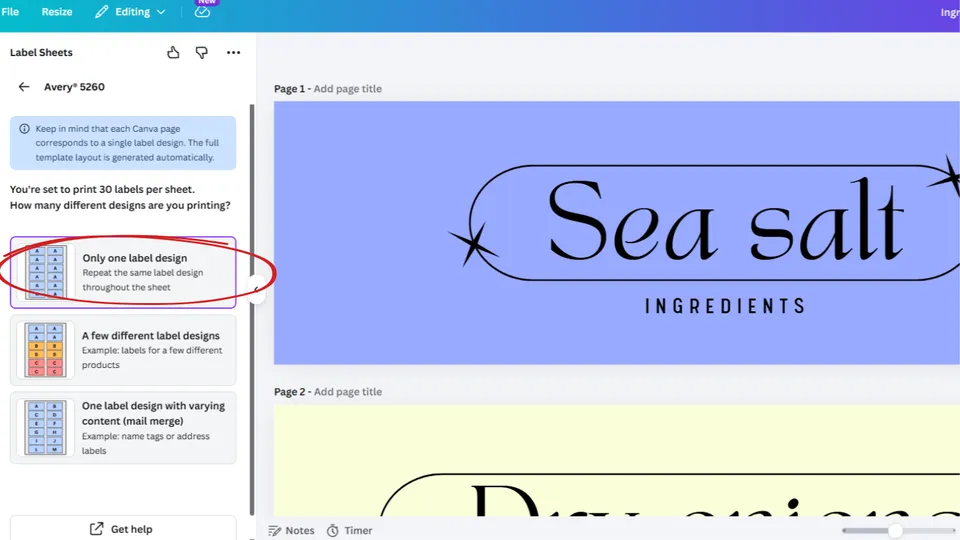
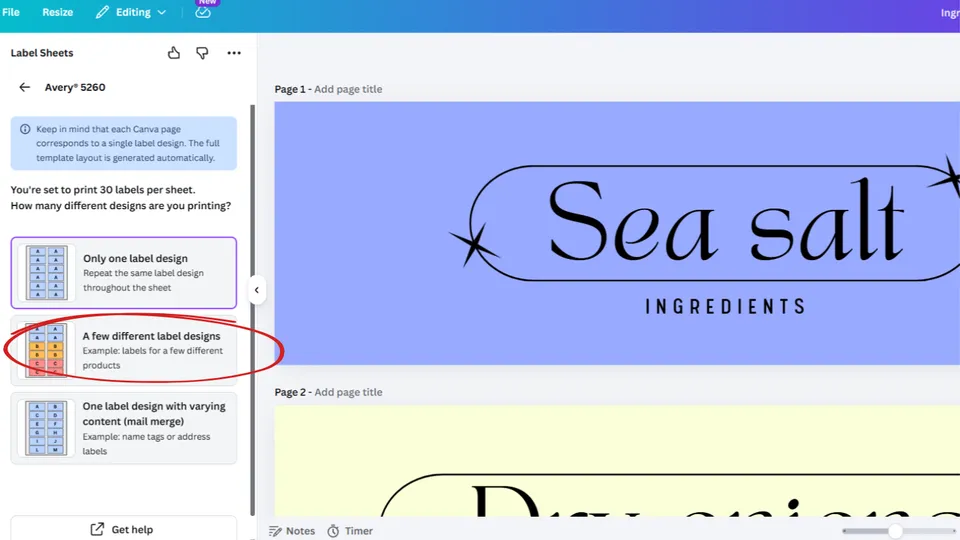
Once you select the Only one label design option, you can begin designing your label.
Follow these steps:
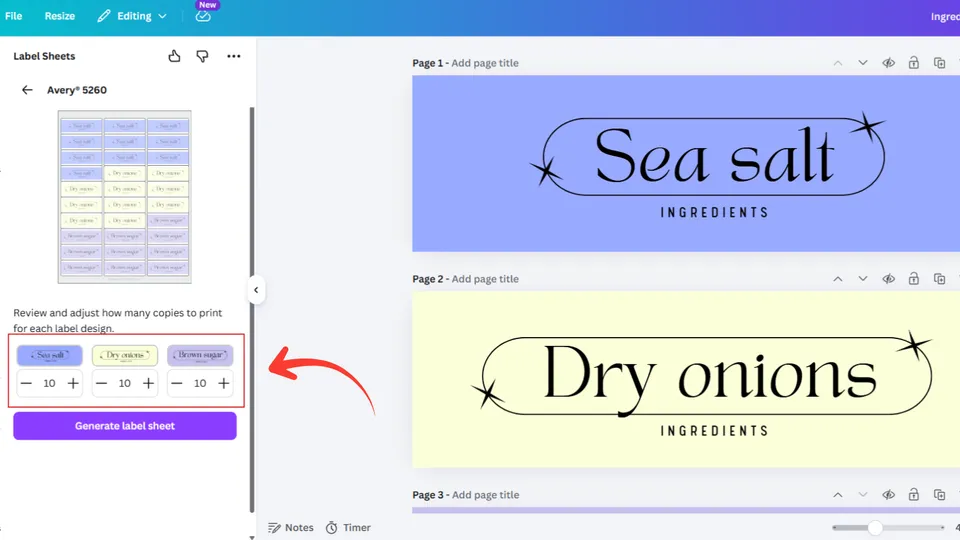
Once you select the A few different label designs option, you can begin designing your labels. Each Canva page represents one label.
Follow these steps:
When you need to create label designs using data from a spreadsheet (also known as mail merge), Canva offers an app specifically designed for this purpose: the Bulk Create app. It allows you to merge spreadsheet data into your label designs, making it a useful companion to the Label Sheets app. This is ideal for designing and printing name tags, address labels, and other data-intensive labels.
Once you have finished generating all your label designs from the spreadsheet data, select the one label design with varying content option to print them on the label sheet of your choice.
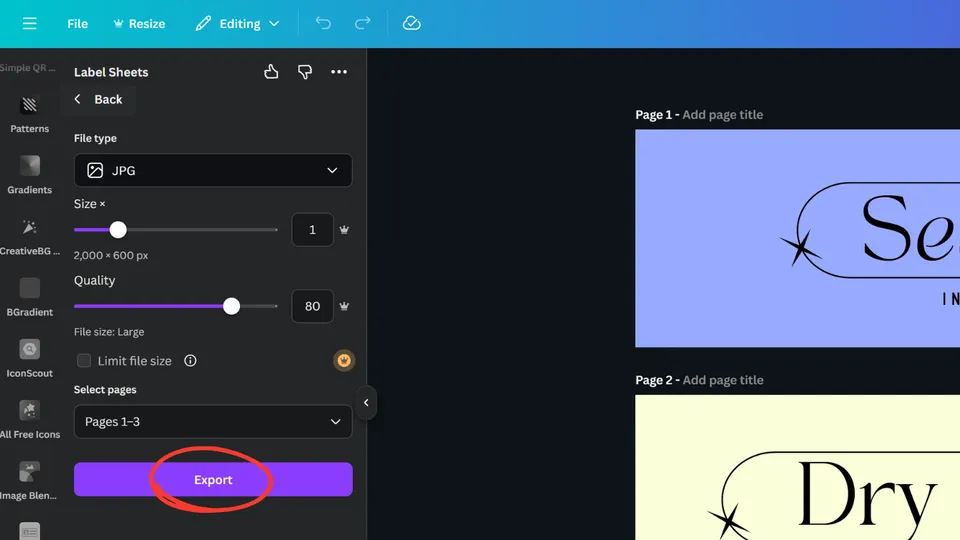
In the next step, you'll be asked to choose the Canva design page(s) that contain the label designs you want to print. In Canva, this selection process is called "Export". The export view lets you set the following options:
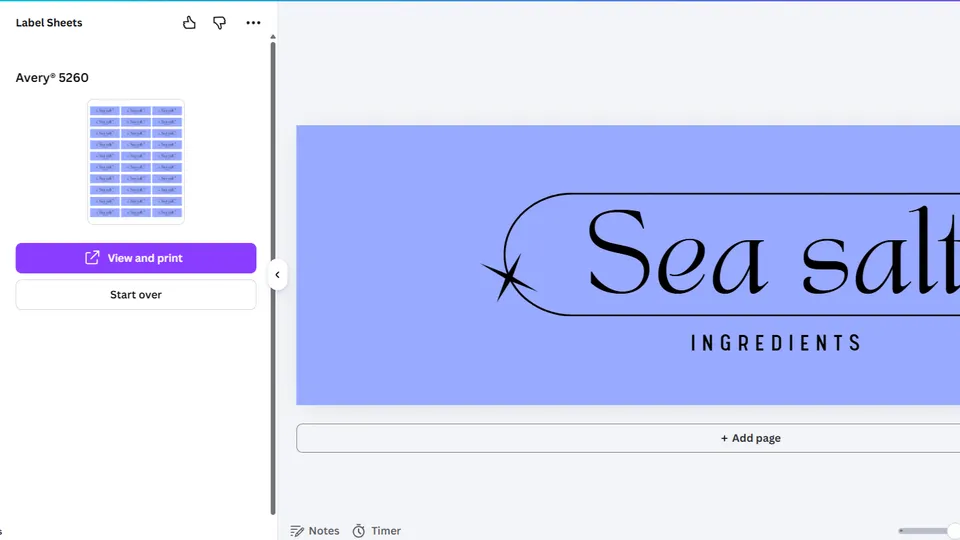
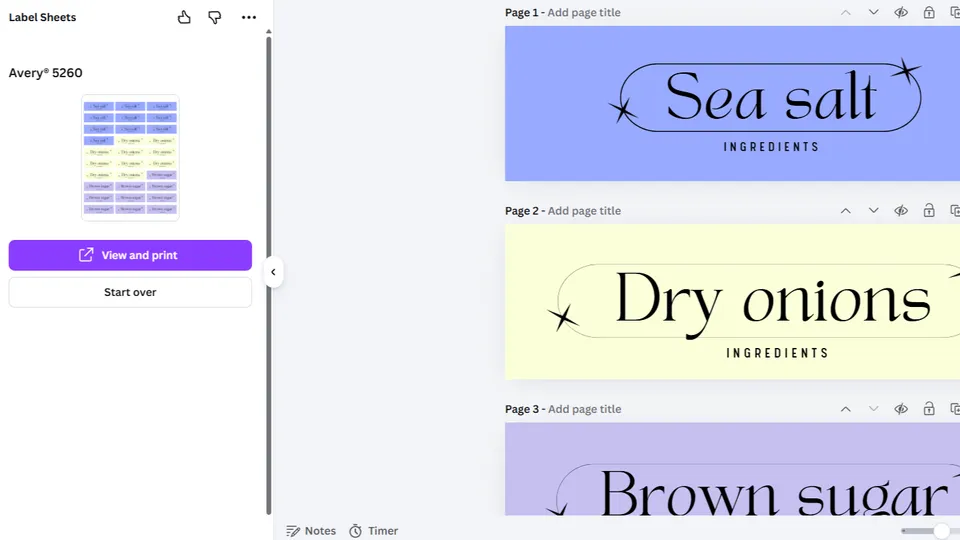
Once the app generates the print preview and you click the “View and Print” button, Canva displays a notice informing you that you will be redirected to an Ecardify URL where the Hlabels printing process is initiated. Click Continue.
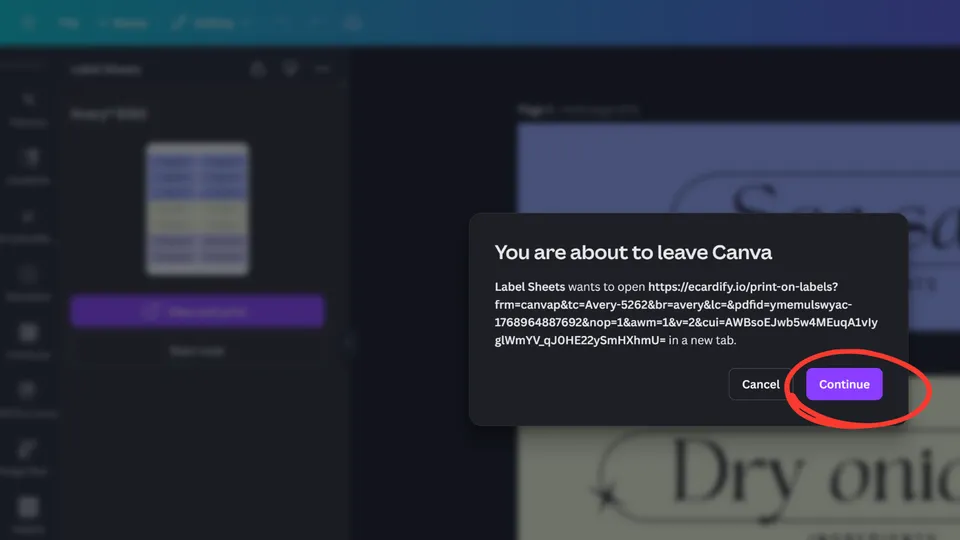
A new tab will open, displaying a larger preview of the generated PDF printout.
If the printout contains multiple pages, only the first page will be displayed.
Note the two large buttons: ‘Save’ and ‘Print’.
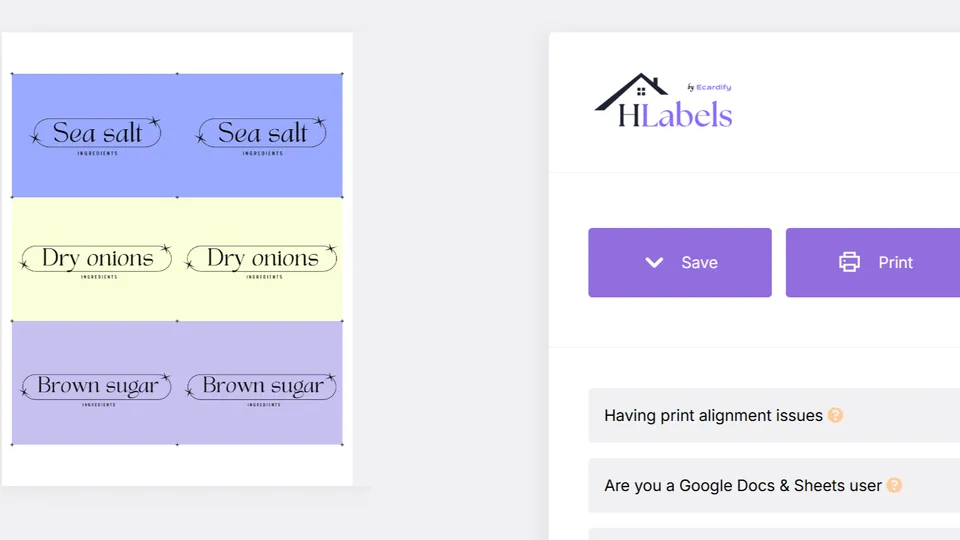
Click the ‘Save’ button to download the printout as a PDF file to your computer. You can print it at any time using any PDF reader.
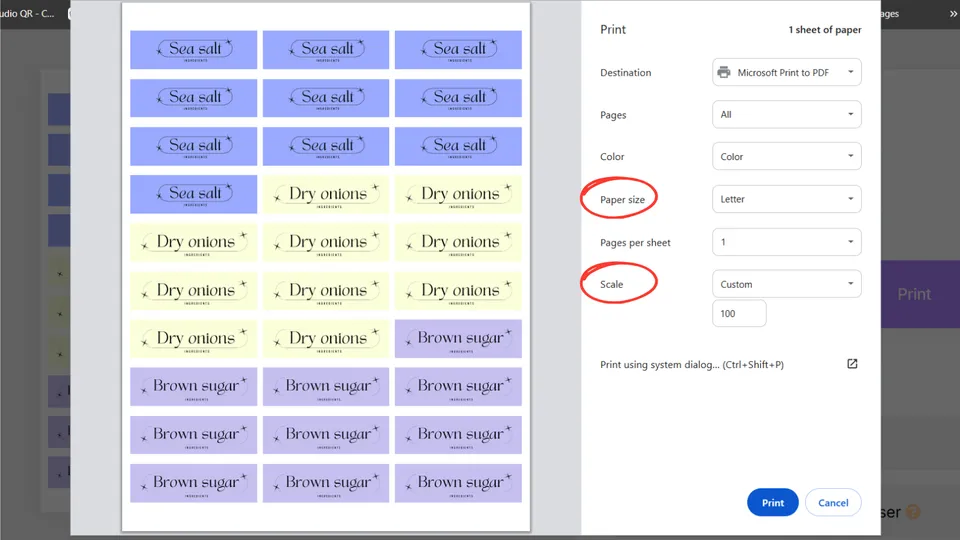
Click the ‘Print’ button to send the printout directly to your inkjet or laser printer. In the dialog that appears, make sure to click the ‘More settings’ link and review the following settings:
If you encounter print alignment issues, this document will help you identify the cause and apply a fix. Small misalignments caused by the printer can be compensated through the Alignment & Positioning settings. You can also contact us for assistance.
Custom label sheets allow you to define your own label sheet layout when standard templates are not suitable or not available. Instead of using predefined sizes, spacing, and margins, you can set the exact label dimensions, gaps, and page margins to match your specific needs.
Use custom label sheets when:
To define a custom label sheet layout and print on it, select the Custom tab at the top of the Canva Label Sheets app panel.
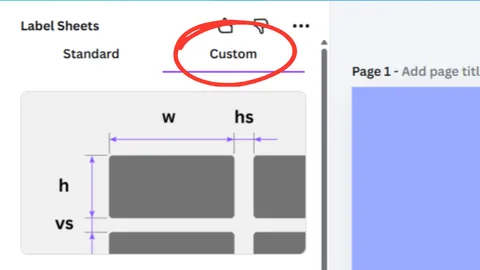
Enter the following information:
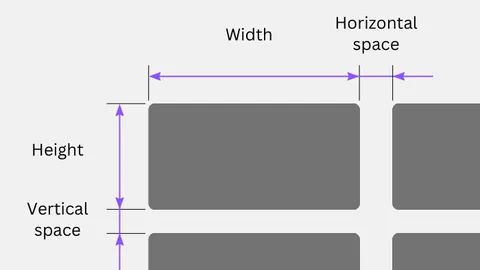
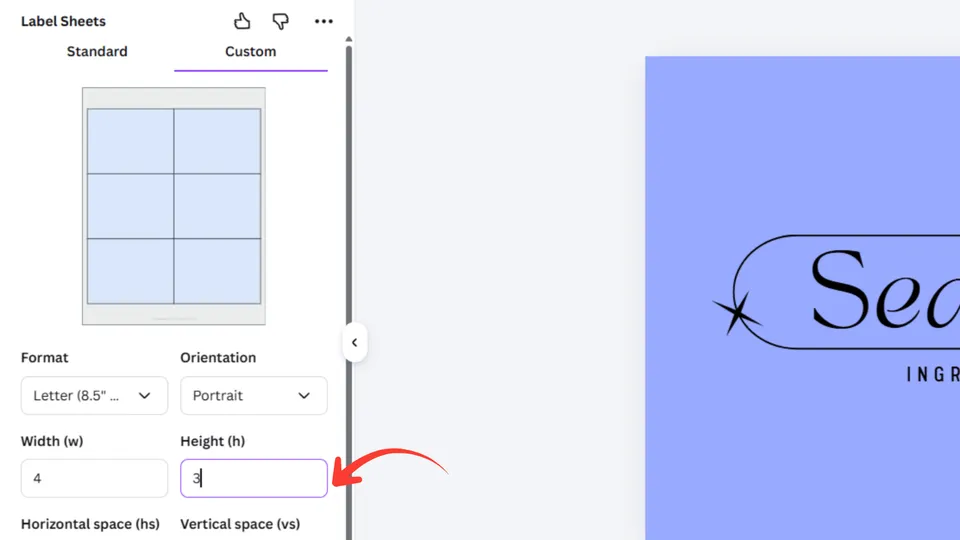
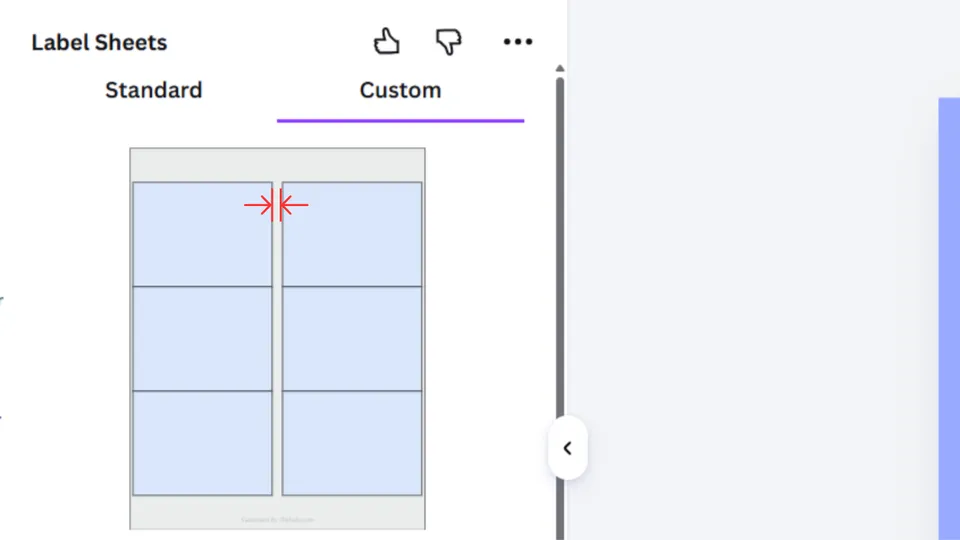
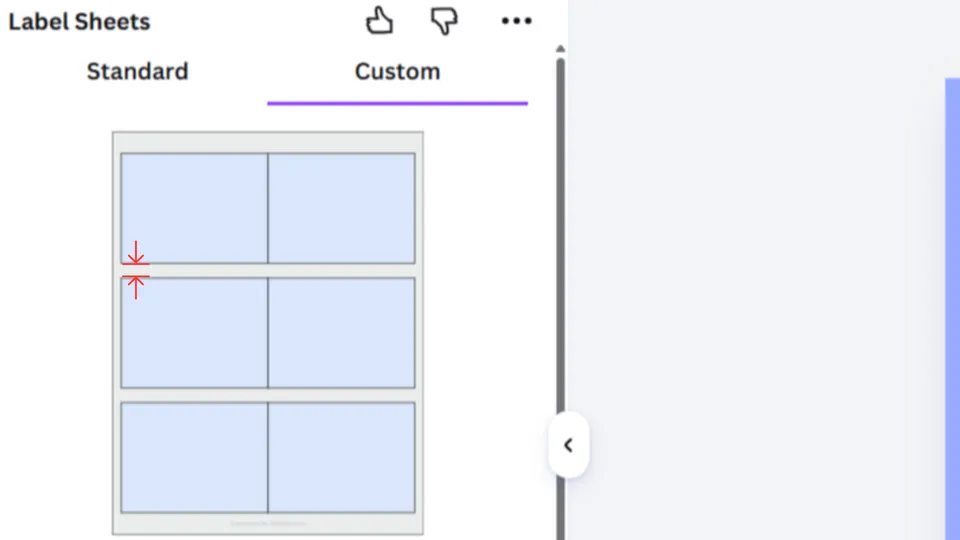
Once all values are set and you have visually confirmed the layout in the preview, click the ‘Continue’ button. The next dialog provides several settings that affect how the labels are positioned, aligned, and displayed on the sheet:
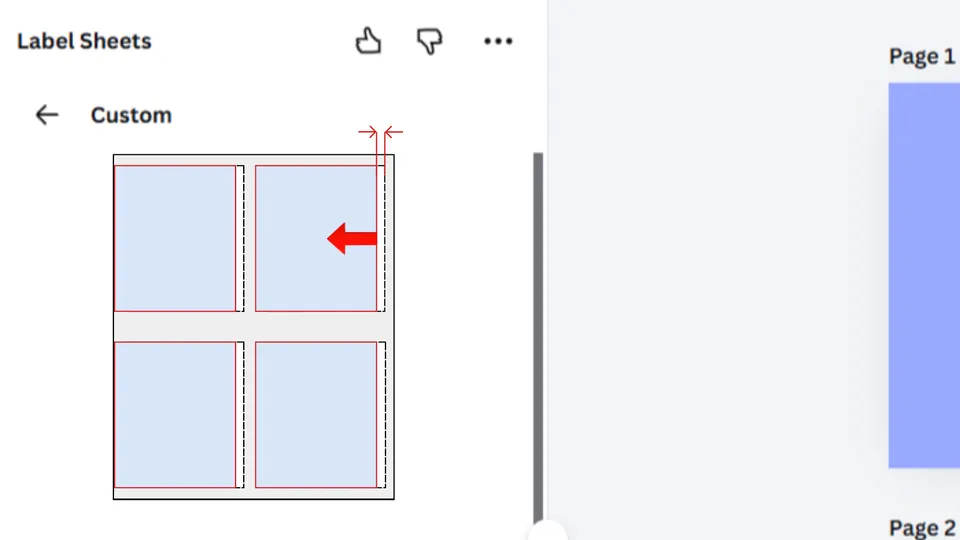
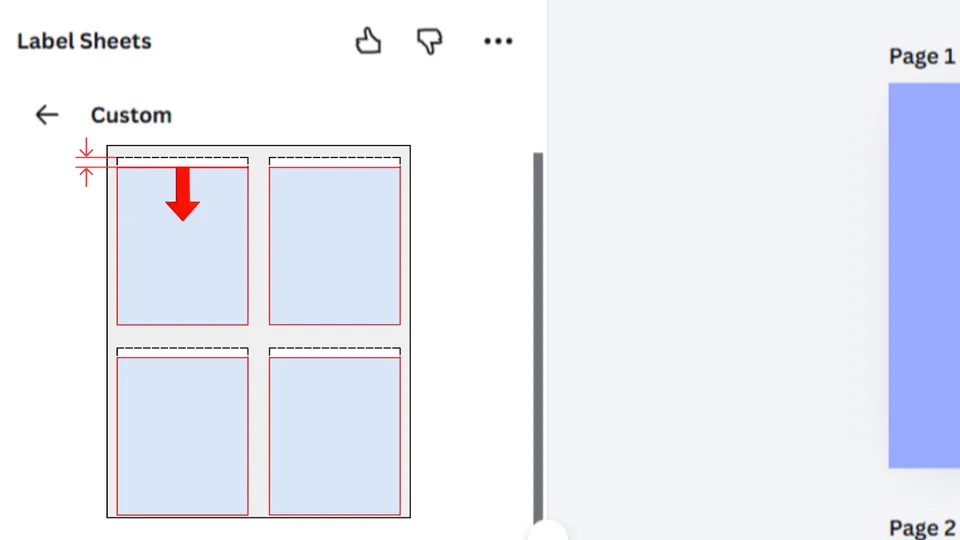
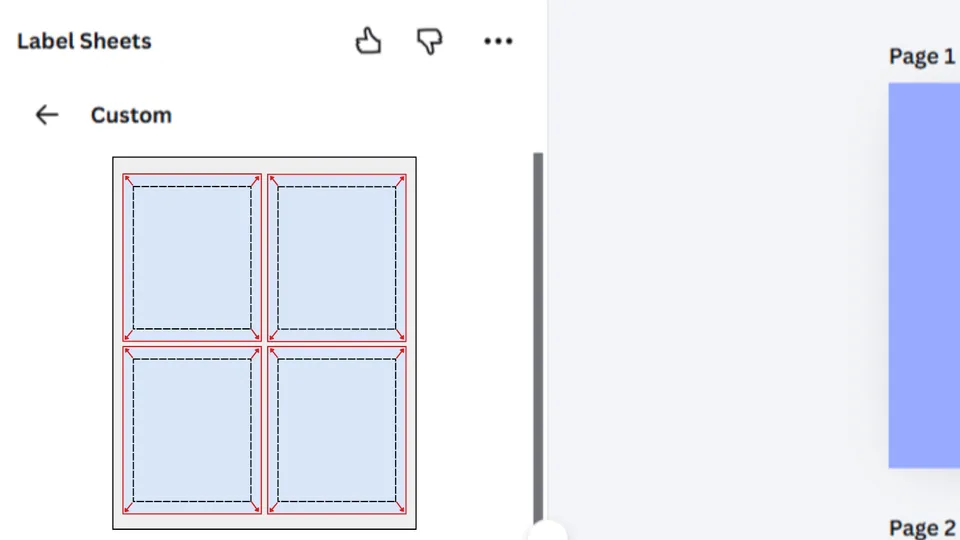
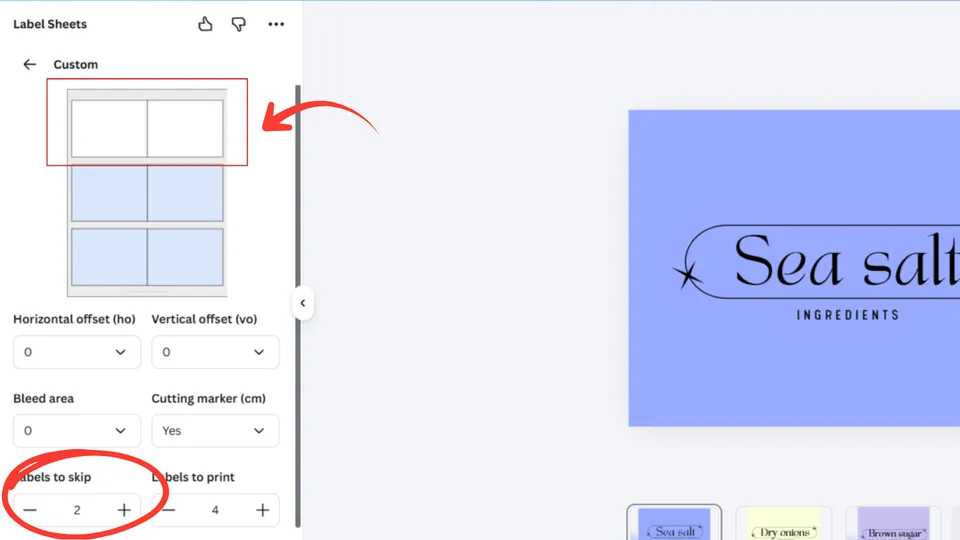
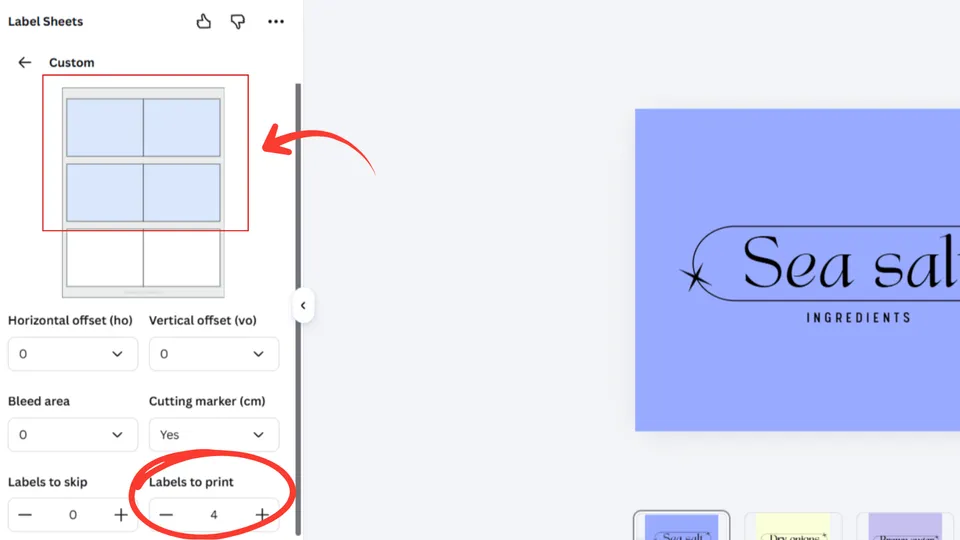
For your convenience, changes to any of these settings are instantly reflected in the layout preview at the top of the app panel.
Once all values are set and you have visually confirmed the layout in the preview, click the ‘Continue’ button.
The remaining steps are the same as those for Standard Label Sheets. Follow the instructions provided there.
As noted in the Print on Custom Label Sheets section, the app provides several settings that affect how labels are placed, aligned, and displayed on the sheet.
When printing on Standard Label Sheets, these same settings are grouped in a dedicated dialog, which you can access by clicking the Manage button.
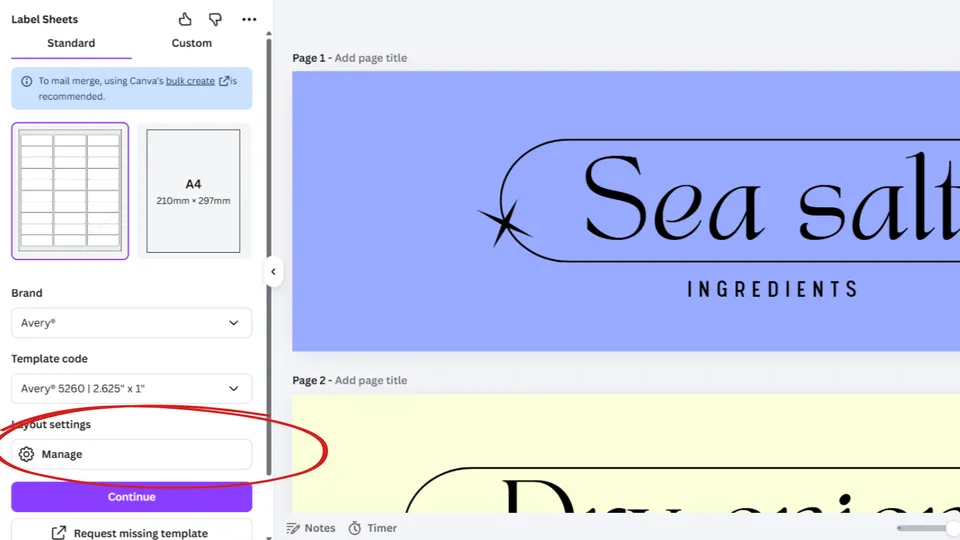
The Alignment & Positioning dialog contains the following settings:
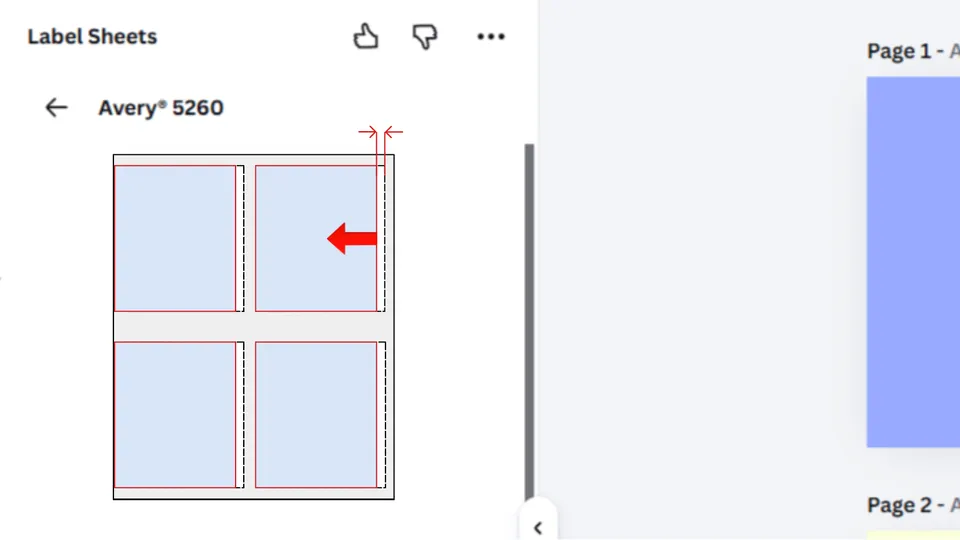
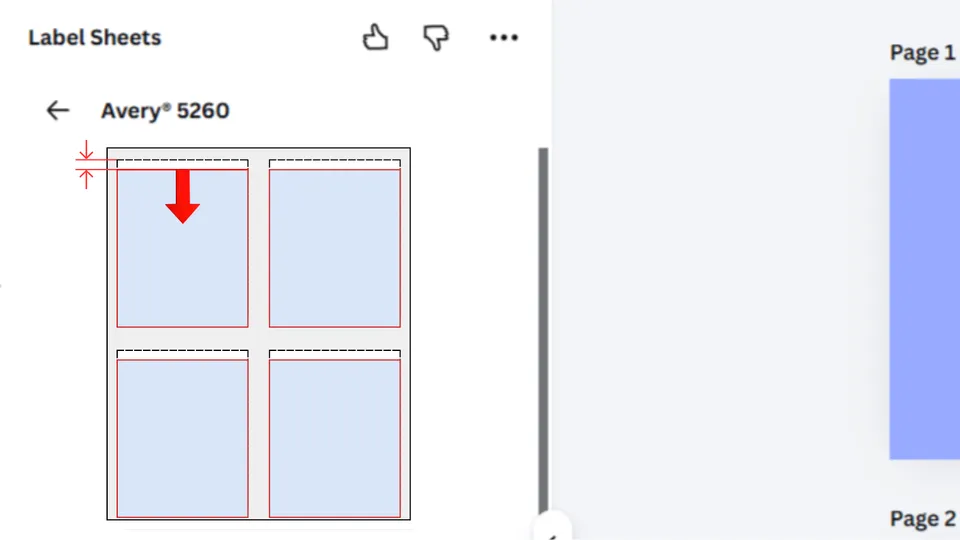
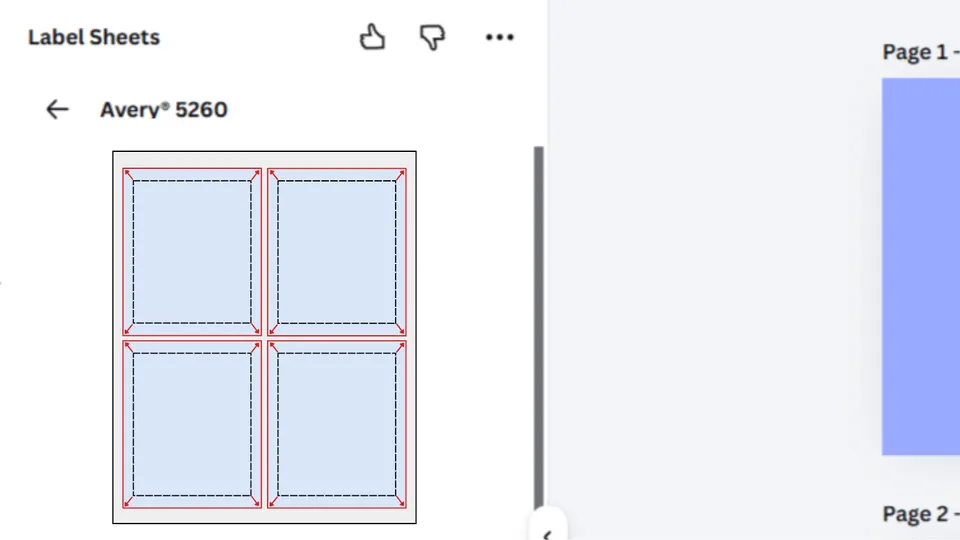
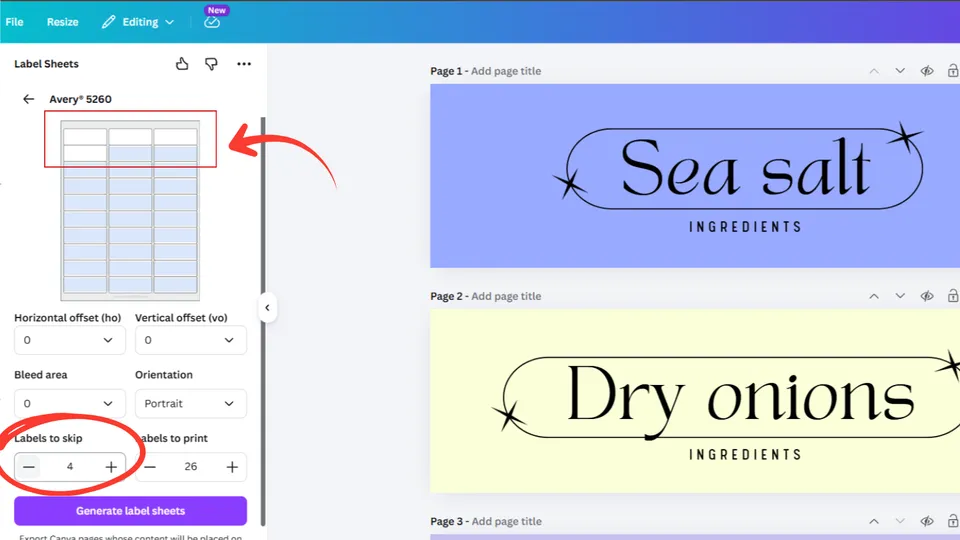
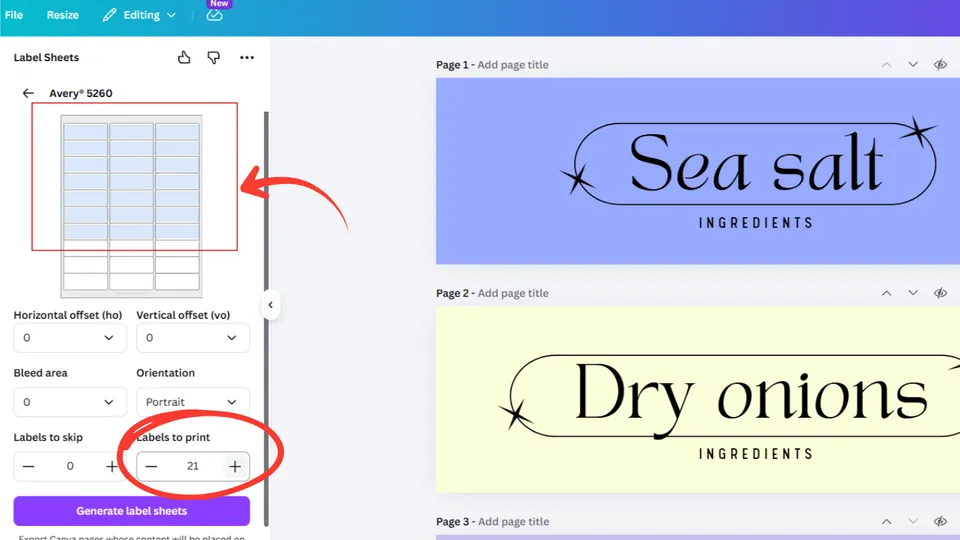
When you print on a Standard Label Sheet and adjust any of these settings, the app remembers them and pre-fills their values the next time you use the same label sheet product.
Yes. The Label Sheets app takes your Canva label design and generates the complete label sheet layout for you. You can use a standard label sheet template or define a custom layout, so you do not have to manually copy and position the design into every label on the sheet.
The most important thing is that your Canva design has the same width-to-height ratio as the physical label. The design does not need to use the same units or exact dimensions; for example, a design measured in pixels can still fit a label measured in inches or millimeters as long as the proportions match. If you are creating the design using physical dimensions, you can use the label's actual width and height. Hlabels preserves the design's original proportions and does not stretch or distort it to make its proportions match the shape of the label. If the design and label have different width-to-height ratios, some empty space may remain around the printed design.
Yes. The Label Sheets app supports Avery label sheets, along with 101 other label brands. To use an Avery template, leave Standard selected, which is the default option, choose the correct page format, either Letter or A4, select Avery as the brand, and then select the exact Avery template code printed on your label sheet product. The app uses that template to generate the label positions automatically.
Use the Orientation setting in the Label Sheets app. Setting Orientation to Landscape rotates the Canva design -90 degrees when it is placed on each label, without requiring you to rotate or rebuild the original design in Canva. This does not change the orientation of the label sheet page, so when you print the generated sheet, keep the printer's Layout setting on Portrait.
Select the Only one label design option. After you finish the design and continue, the Label Sheets app repeats that design across the available label positions and generates the print-ready sheet. For a step-by-step demonstration, watch the video on repeating the same label design across a label sheet.
Create each label design on its own Canva page, choose the A few different label designs option, and select the pages you want to print. The app lets you adjust how many copies of each design appear on the sheet and creates additional label sheet pages automatically when needed. For a step-by-step demonstration, watch the video on placing different label designs on one sheet.
Use Canva Bulk Create to merge spreadsheet data into the variable parts of your design and generate the individual Canva pages. Then select the “One label design with varying content” option in the Label Sheets app to place those generated designs onto your label sheets for printing. See the mail merge instructions for the full workflow. You can also watch the video on printing mail-merged Canva label designs on label sheets.
In Canva, saving a design for label printing is done through the Export function. Either JPG or PNG can be used. For most home label printing, JPG works well. If you notice print-quality issues, you can try PNG, but first check the export file size and quality settings because those settings can have a greater effect on print quality. For a visual walkthrough of these settings, watch the video on exporting Label Designs for Printing on label sheets in Canva.
Yes. After the Label Sheets app generates the label sheet printout from your Canva designs, click View and Print and then use the Save button to download it as a PDF. You can keep the PDF and print it later using a PDF reader.
Whether you print the generated label sheet immediately or save it as a PDF and print it later, use the same basic print settings: keep the layout on Portrait, set the paper size to match the physical label sheet, either Letter or A4, and use Actual Size or 100% for scaling. These settings help preserve the size and position of the label layout when it is printed.
First make sure you are using the correct print settings described above. If the remaining error is a small, consistent shift, use the Horizontal Offset or Vertical Offset settings in the Label Sheets app to move the entire label layout slightly left, right, up, or down and correct the shift. The Label Sheets app provides offsets from 1 to 3 mm. For larger or progressive alignment errors, use the full label-printing troubleshooting guide to identify the cause. For a visual walkthrough of the offset settings, watch the video on managing the layout of a label sheet printout.
You have two ways to proceed. You can use the Custom tab in the Label Sheets app and manually measure the physical label sheet to enter its label size and spacing. Or, you can contact us and request that the missing label sheet product be added to the Canva Label Sheets app. For a step-by-step demonstration of creating the layout manually, watch the video on creating a custom label sheet template in Canva.
Use the Labels to skip setting to tell the app how many label positions at the beginning of the sheet have already been printed. The generated printout will leave those positions blank and start printing on the remaining labels. The same setting is also available for custom layouts.
You can do this by combining two settings: Labels to skip and Labels to print. Labels to skip controls how many label positions at the beginning of the sheet are left blank, while Labels to print controls how many labels are printed after that point. Together, these settings let you print only on the section of the label sheet you want, whether the positions around it have already been used or you want to leave them unused for later.
The Bleed setting enlarges each label design slightly in the generated label sheet printout. Applying 1% to 5% bleed makes each printed design extend farther beyond the label's cut line, which can help hide small printer feeding or positioning variations that might otherwise leave a thin white edge. The same setting is available for custom label layouts. For a visual walkthrough of bleed and the other layout controls, watch the video on managing the layout of a label sheet printout.
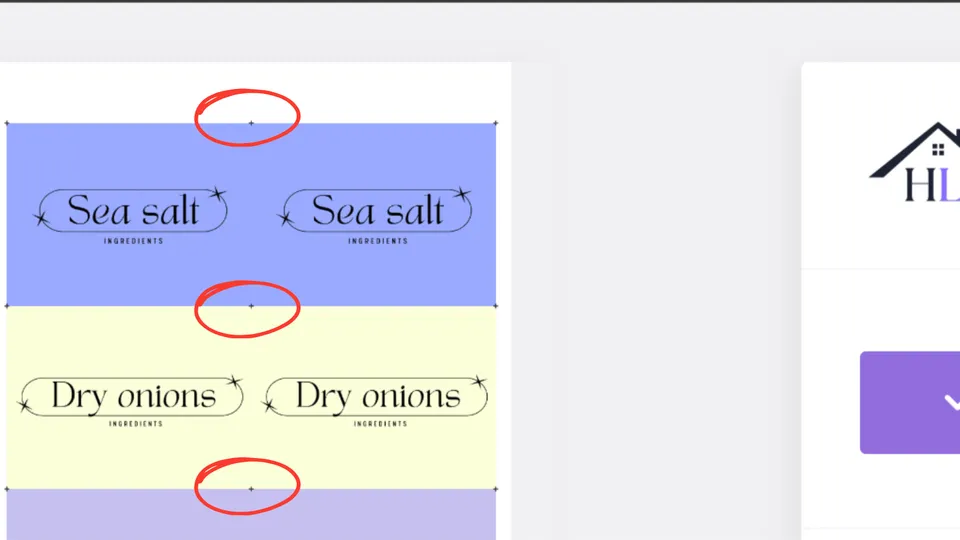
Create a custom label sheet layout. In most cases, it is easiest to leave the horizontal and vertical spacing at zero so adjacent labels can share the same cut line. You can also turn on Cutting marker so the app prints cross-shaped guides at the label corners to help you cut the sheet accurately.
If you didn’t find what you were looking for, or something isn’t clear, feel free to reach out. We’re happy to help.
We meet you where you are. Learn how to use our label printing service from within Microsoft Word, Google Docs, Google Sheets, Adobe Express, or even directly from your browser.
If you already have one or more label designs saved as PNG or JPG image files, you can upload them to our website and generate a ready-to-print PDF.
 Go to Label Sheets App
We respect your privacy and want you to have control over your data. Please choose your preferences: